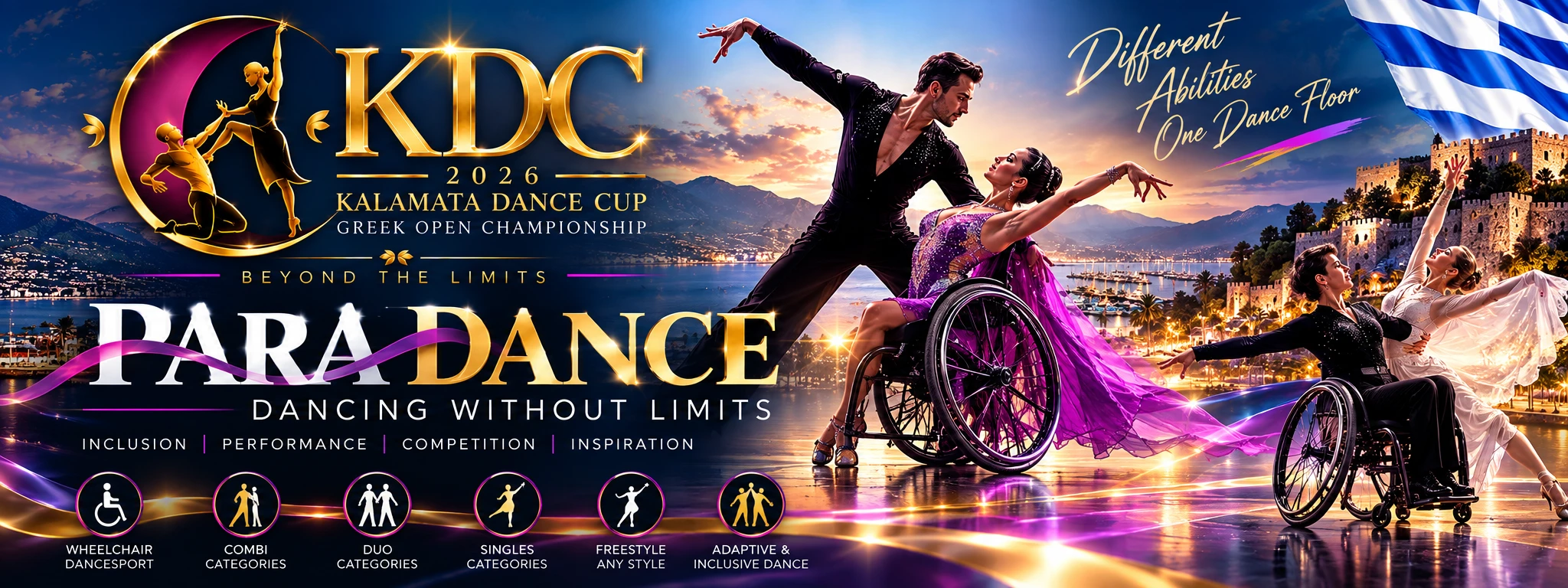
Different abilities. One dance floor.
KDC creates opportunities for dancers to compete, perform, develop and belong. From structured Para DanceSport to adaptive and inclusive performance, the focus is ability, artistry, participation and the shared experience of dance.
Three ways to experience Para Dance at KDC
Competitive Para DanceSport
Structured competition using defined formats, eligibility requirements and, where applicable, sport classification.
Adaptive Dance
Dance adapted to the dancer’s functional needs and preferred way of moving, with development and expression at its centre.
Inclusive Performance
Creative opportunities for dancers with different abilities to share the stage through solo, partner or group performance.
Competition & performance formats
Competition, classification & participation
Technical information is available when you need it. Open only the topic relevant to your entry.
What is Para Dance classification?
In formal Para sport, classification determines eligibility and groups eligible athletes according to how an impairment affects sport-specific activity. Its purpose is to reduce the impact of impairment on competition outcomes so sporting skill and performance can determine results as far as possible.
Formal international classification should not automatically be assumed to apply to every KDC inclusive or performance activity.
What are the international Para Dance formats?
Established international wheelchair Para DanceSport formats include Singles, Combi and Duo. Conventional competition includes Latin American and Ballroom Standard dances, while Freestyle allows a broader choreographic vocabulary.
What new Para Dance pathways are developing?
International Para Dance programmes continue to develop opportunities beyond traditional wheelchair formats, including work involving dancers with vision impairment, intellectual impairment and powerchair dancers.
These developments are provided for context and do not automatically define KDC 2026 categories or eligibility.
Do I need international classification to participate at KDC?
Not every inclusive or performance pathway necessarily requires international sport classification. Participants should follow the published requirements for the specific KDC category they wish to enter. When uncertain, contact the KDC organisation before registration.
Five steps to the dance floor
For dancers, coaches & organisations
Coaches, Schools & Associations
Contact KDC when you need help identifying the appropriate competitive, adaptive or inclusive pathway. Early communication also helps coordinate music, choreography, partner or team composition and event-day requirements.
Accessibility & Assistance
Accessibility needs differ from dancer to dancer. Contact KDC in advance regarding access, assistance or practical requirements so the organising team can confirm the facilities and support available for the 2026 event.
Event information
International Para DanceSport terminology is provided as educational guidance. KDC-specific categories and eligibility are governed by the official KDC 2026 competition information.
EVERY DANCER DESERVES A STAGE.
Competition. Performance. Expression. Inclusion. One dance community at KDC 2026.